Feathers can be colorful and spectacular in their own right, but how much more stunning might they be when used as canvases for artists, eager to demonstrate their talent for the unusual?
Source
via Presurfer
Showing posts with label nature. Show all posts
Showing posts with label nature. Show all posts
Amazing Feather Paintings
What's new?
New species discovered in 2010
From invisible squids to bald parrots to deep-sea fish with teeth on their tongues, guardian.co.uk picks the best of of 2010's newly discovered animals.
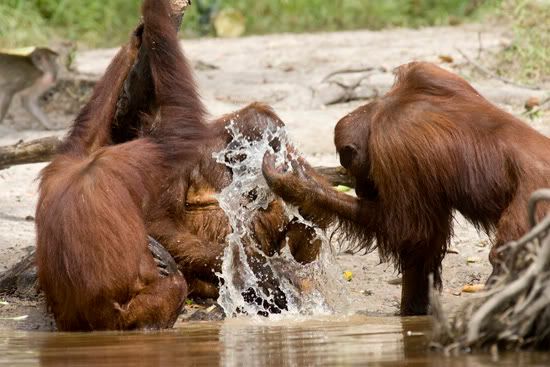
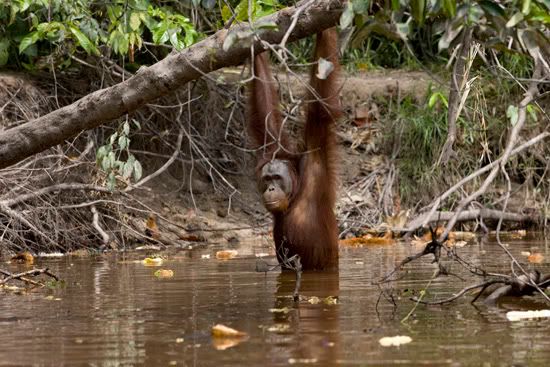
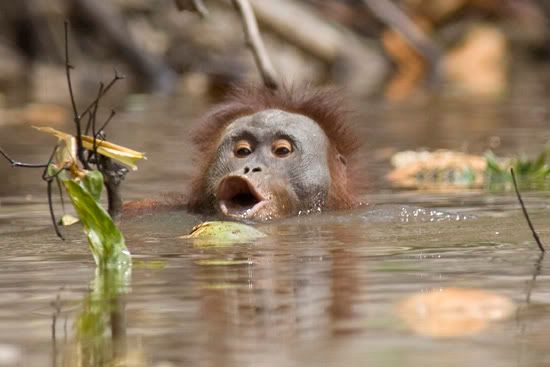
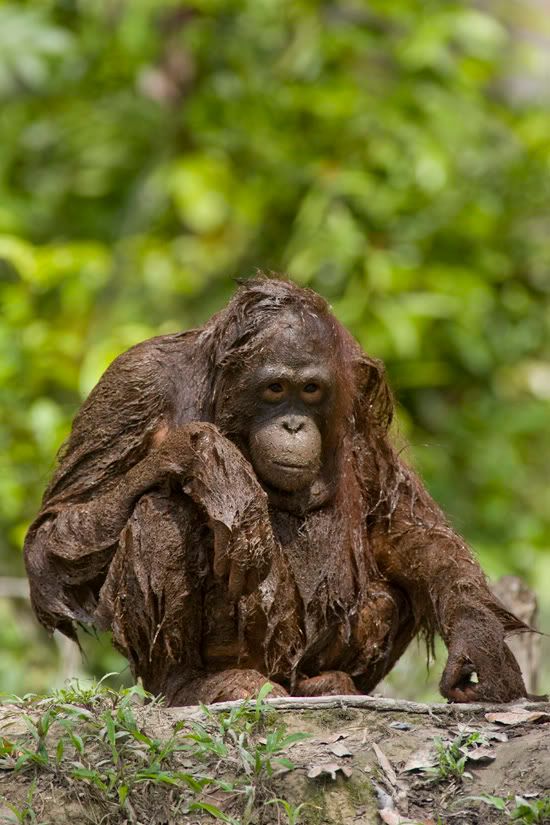
Meet me at the swimming hole
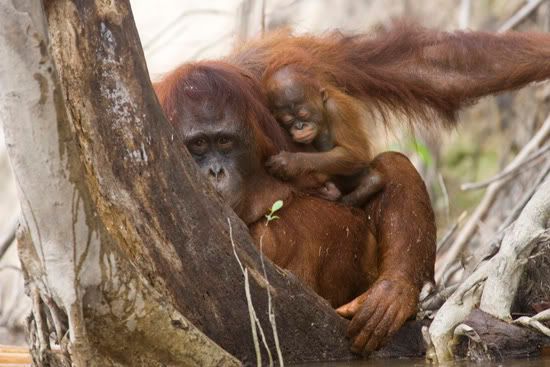
These incredible pictures of orangutans swimming in an Indonesian
river have left wildlife experts stunned.
Playing on the Rungan River, near to Palas Island on Borneo, these
orangutans can be seen swimming and submerging themselves in the muddy
waters.
For experts the behaviour of these orangutans – who like all apes have
a natural fear of water because of predators such as crocodiles -
could prove to be a significant step forward in their evolution.
“This is a rarity – to see orangutans coming down for a swim is
unheard of in the wild,” says Simon Husson – project advisor and
scientific consultant for Borneo Orangutan Survival (BOS) Foundation.
“However, we know that orangutans are intelligent and innovative."
Source
Gay German Zoo Pair Raising Baby
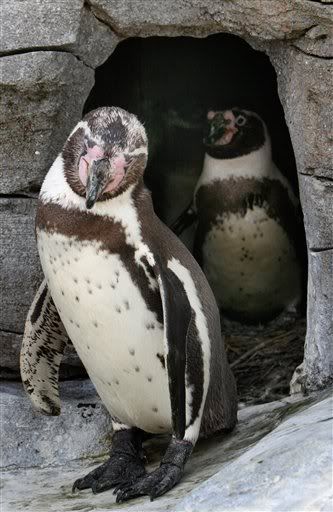
After a penguin egg had been abandoned by its biological parents, it was placed in the male penguins' nest, who then adopted and hatched it.
Bremerhaven zoo veterinarian Schoene said the male birds, named Z and Vielpunkt, are one of three same-sex pairs among the zoo's 20 Humboldt penguins that have attempted to mate.
AP Photo/Focke Strangmann
Source
Wild Wonders of Europe
Wild Wonders of Europe showcases beautiful photo galleries sponsored by National Geographic which highlight the flora and fauna of Europe.
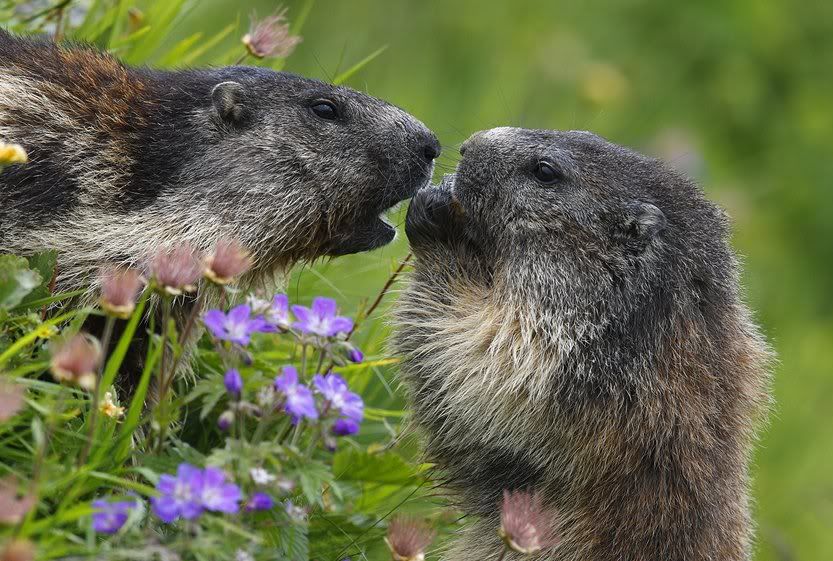
This is Marmots Feeding on Flowers by Grezgorz Lesniewski, from the Austria Galleries
International Garden Photographer of the Year
The finalists of the UK's International Garden Photographer of the Year award have just been announced.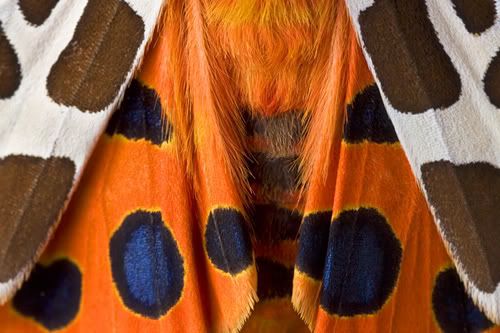
This picture of a garden tiger moth (Arctia caja) was taken in Amersham, Buckinghamshire. The caterpillars of this moth feed on nettles, so if you want these moths to be a feature in your garden, then keep a rough, uncultivated patch
(via Look at This)
The Most Dangerous Bird on Earth

Considered dangerous because when the birds become frightened (they are naturally skittish) they can attack and do damage with their claws, one of which is almost five inches in length. Their inner toe in the medial position looks like a dagger. When panicked these birds have been known to kick - and sometimes kill - dogs and humans.
Urban myths abound about the birds being able to disembowel a man with their claws. The last record human death by cassowary was in 1926. The claws however cannot do this - though they can leave a nasty puncture wound up to two centimeters in diameter.
Source
(via Webphemera)
Subscribe to:
Posts (Atom)


