
Australian Bat Clinic and Wildlife Trauma Centre director Trish Wimberley and her carers have helped save 130 orphaned bats on the Gold Coast in past weeks.
They saved 350 young bats during the 2008 storm season but this year think there's more going on than just wild weather.
Carers have visited several bat 'camps' on the coast in recent weeks to find four-week-old babies on the ground covered in maggots and fly eggs.
Trish said: 'They're coming down to feed on the ground. That makes them vulnerable. It's not a natural occurrence and shows there is trouble in the environment.
'Bats are a barometer to what is going on in the environment. They're our canaries down the coal mine'.
Source
Showing posts with label bats. Show all posts
Showing posts with label bats. Show all posts
Orphaned bat epidemic in Australia
Are cavers spreading lethal bat disease?
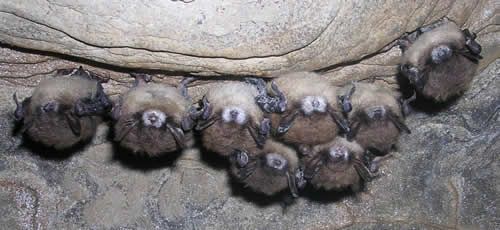
Now, they have big clue: Humans, specifically cavers, who "may be spreading the causative agent."
Source
Photo Credit: Nancy Heaslip, New York Dept. of Environmental Conservation
Little brown bats with white-nose syndrome, New York
Subscribe to:
Posts (Atom)


